


Events
Lady of the President of the RA, Nune Sarkissian’s official visit to the History Museum of Armenia

Nune Sarkissian, spouse of the Armenian President, visited the History Museum of Armenia on April 13, 2018.
“I think the existence and preservation of this Museum is very important for our entire people. History is the basis of our nation, our present. I wanted to once again feel this pride by visiting this museum. What has been left from millennium is really wonderful”.
– Nune Sarkissian
Her last visit to the Museum was held in 2001. “We can proudly bring our country’s guests here. Visit to new country starts from knowledge on history. I think every tourist must start his visit in Armenia from this Museum”,- she said.
Photos by Mkhitar Khachatryan (c) Armenpress News Agency
The opening ceremony of the exhibition “Armenia and Iran: Memory of the Land”

On October 17, the opening ceremony of the exhibition “ARMENIA AND IRAN: MEMORY OF THE LAND ” took place at the National Museum of Iran. For the first time, 103 objects from the History Museum of Armenia together with 103 contemporary (4th millennium BC – 1st century BC) objects from the National Museum of Iran are shown side by side, manifesting the ancient sources of the cultural and spiritual values of the two countries, the memory of the lands of Armenia and Iran. As the director of the History Museum of Armenia G. Grigoryan mentioned in his speech: “This exceptional exhibition was born due to the unprecedented cooperation between the two state museums, the largest and most important cultural institutions of Iran and Armenia, and I hope that it will be continued”.
The preparatory work of the joint exhibition “Armenia and Iran: Memory of the Land”

The preparatory work of the joint exhibition “Armenia and Iran: Memory of the Land”
The preparatory work of the joint exhibition ARMENIA AND IRAN: MEMORY OF THE LAND, opening on October 17, 2017, identification and classification of the specimens are being carried out at full speed. Our Iranian colleagues must be highly praised for their efforts, devotion and highly professional skills.
Artashes Tumanyan, the Extraordinary and Plenipotentiary Ambassador of the Republic of Armenia in the Islamic Republic of Iran, visited the National Museum of Iran to get acquainted with the process of constructing the exhibition.
Photographs from the process of identifying and registering the condition of a Ritual Jar from Sanahin at the National Museum of Iran

Photographs from the process of identifying and registering the condition of a Ritual Jar from Sanahin at the National Museum of Iran
One hundred objects from the collections of the History Museum of Armenia will be presented at the joint exhibition ARMENIA AND IRAN: MEMORY OF THE LAND, opening at the National Museum of Iran on October 17, 2017. On October 3, all the objects arrived in Tehran, accompanied by Manvel Ghalachyan and Artur Simonyan from the staff of the History Museum of Armenia. The identification of the objects has already been completed and, according to the procedure, both sides signed Acts of Delivery and Acceptance (Condition Reports), registering the condition of each object.
The State Symbols of the RA a special guided visit

On July 6, at 15:00 – 16:30
A special guided visit will take place at the History Museum of Armenia. on the topic “The State Symbols of the Republic of Armenia”.
Speaker: Seda Galstyan
Entrance fee: a Museum ticket.
The Exhibition at the Vittoriano Complex in Rome
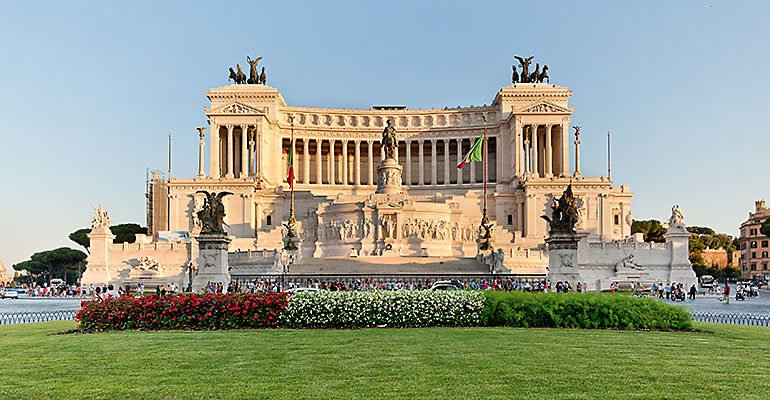
The History Museum of Armenia is taking part
in the exhibition at the Vittoriano Complex in Rome
commemorating the centenary of the Armenian Genocide
(March 5 – May 3, 2015)
According to the Agreement signed between the Ministry of Culture of Armenia and Comunicare Organizzando, an exhibition entitled “Armenia, the people of the Ark” devoted to Armenian art and Armenian-Italian connections and commemorating the centenary of the Armenian Genocide will open at the Vittoriano Complex in Rome on March 5, 2015 and continue till May 3, 2015.
Three cultural institutions will take part in the exhibition from the Republic of Armenia and present 26 objects: the History Museum of Armenia (18 objects), the Holy See of Etchmiadzin Museums (6 objects) and the Mashtots Matenadaran (2 objects).
Six cultural institutions from the Republic of Italy will also take part in the exhibition with over sixty exceptional documents and objects: Archives of Venice and Genoa, State Archives of Seville, Secretary Archives of the Vatican, Museum Correr in Venice, as well as the Congregation of the Mekhitharists with thirteen unique manuscripts.
The Culture of Shengavit
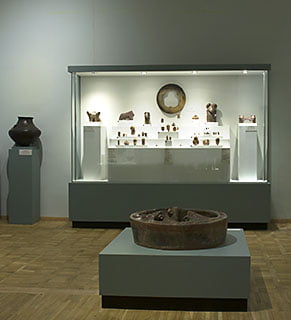
The History Museum Of Armenian Presents New Permanent Exhibition entitled THE CULTURE OF SHENGAVIT (second half of the 4th mill. BC – first half of the 3rd mill. BC).
In the second half of the 4th millennium BC, the culture of the Early Bronze Age, also known as Shengavit or Kuro-Arax cultures, took shape in Armenia. It embraced an enormous territory, including the Armenian Highland and adjacent regions. The most important centre of this culture was the Valley of Ararat.
More than six hundred fortress-settlements and burial mounds of the Early Bronze Age were found in excavations. Settlements of three to fifteen hectares were mainly built in the lowlands and foothills, abounding in water. The larger ones had walls with secret entrances and a citadel.
The rich and diverse assortment of specimens, excavated from Shengavit, Mokhrablour, Karnut, Harich, Agarak, Elar, Jrashen, Berkaber and other sites, testifies to the fact that the distinctive material and spiritual culture of the native population of Armenia occupied a special place in the earliest Near Eastern civilization. In this context, of exceptional value are the Early Bronze Age pottery of Armenia and its imagery of ritual-magical nature. Engraved, drawn and onlaid images of stylized birds and animals, geometrical ornaments, protuberances and diverse handles predominate in the decoration.
The exhibition presents:
- ritual hearths, stands and supports, clay vessels, anthropomorphic, zoomorphic and phallus-like clay statuettes, excavated from the early settlements of Shengavit, Mokhrablour, Karnut, Harich, Agarak and Elar, are striking illustrations of the worship, rites and beliefs of the inhabitants of the Armenian Highland
- photographs made during the first excavations of Shengavit under the guidance of Evgeny Bayburdian in 1936 – 1938